
How to Choose the Right Agarose: A Complete Selection Guide
Agarose is one of the most fundamental yet critical consumables in molecular biology, but selecting the right one among low-EEO, high-resolution, low-melting, and 3:1 ratio types can be a pain point. This article breaks down the selection logic from 4 core parameters.
1. Electroendosmosis (EEO) is the first dimension:
- EEO ≤ 0.05 (e.g. Radical™ AG1200LE, GTG AG1400LE, HGT AG2000LE): for nucleic acid electrophoresis, protein electrophoresis, IEF where stable electric field is required; DNA/RNA migration is predictable
- EEO 0.10–0.15 (e.g. standard AG): for general DNA detection, rapid screening with no strict resolution requirements
2. Gel strength (1% g/cm²) determines maximum usable concentration:
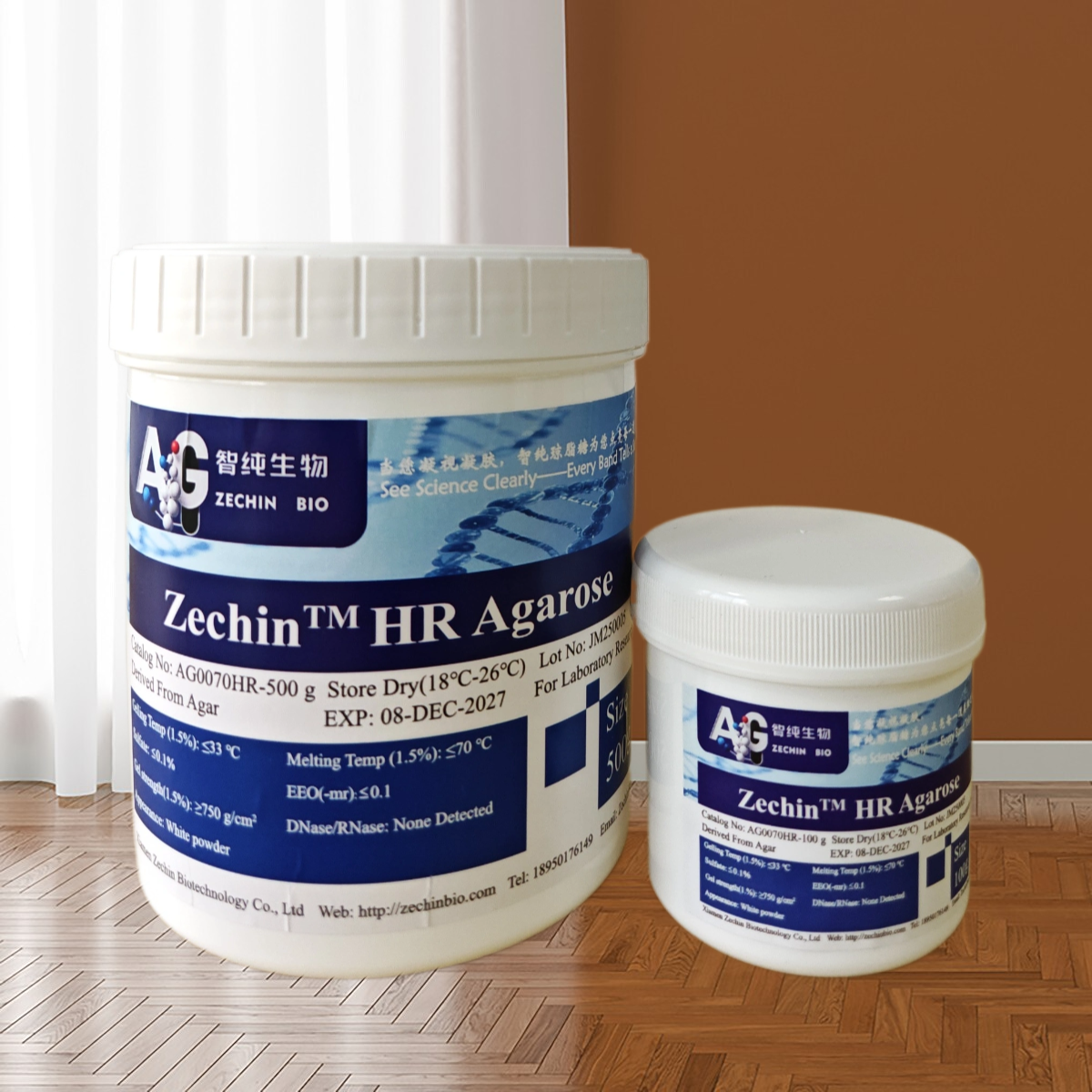
- ≥ 1800 g/cm² (e.g. high-resolution AG0070HR): supports 4% high-concentration gels for sub-50 bp fragment separation
- 1200–1500 g/cm² (general): suitable for 0.8–2% standard concentration, covers most DNA electrophoresis scenarios
3. Melting/gelling temperature enables special applications:
- Low gelling temp (AG0055LG, gelling temp ≤ 30°C): for in-situ cell electrophoresis, protein activity recovery
- Low melting point (AG0065LM, melting point ≤ 65°C): for direct enzymatic digestion after DNA recovery, no gel-melting purification needed
- 3:1 ratio agarose (AG0075HR): combines low melting point with high strength, ideal for pulsed-field electrophoresis (CHEF)
4. Manufacturer qualification matters equally: prioritize suppliers with ISO 13485 certification and batch CV < 2%, ensuring reproducibility across 50+ batches.
Zechin Bio offers 7 flagship agaroses (AG1200LE / AG1400LE / AG2000LE / AG0065LM / AG0075HR / AG0070HR / AG0055LG) with COA and MSDS included per batch.